





Article Content
- 1 What is Glaucoma?
- 2 Methods of Glaucoma Surgery
- 3 Methods of Glaucoma Laser Treatment
- 4 Methods of Glaucoma Surgery
- 5 Detailed Steps of Glaucoma Surgery
- 6 What to do after surgery
- 7 Is Glaucoma surgery painful?
- 8 How long is the recovery time after Glaucoma surgery?
- 9 When should you contact a doctor?
- 10 Myopia Examination & Management at Hikari
Glaucoma is a condition that can damage the optic nerve and affect your vision. Surgery can be an option to reduce intraocular pressure (pressure inside the eye), allowing you to stop or reduce the amount of medication you use. Let's follow the article below with Light to get the most comprehensive overview of glaucoma surgery methods, the detailed steps in the surgical process, and the essential post-operative care tips you need to know!
What is Glaucoma?
Glaucoma, also commonly known in Vietnamese as "bệnh cườm nước," is a group of eye diseases that cause damage to the optic nerve.
The disease typically affects peripheral vision first but can eventually lead to vision loss and permanent blindness over time.
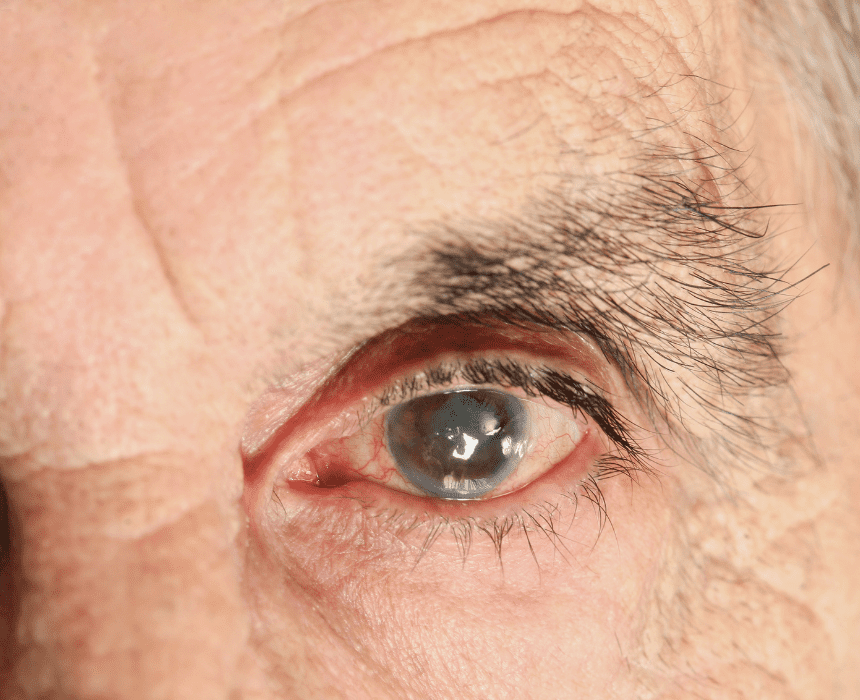
There are many different causes of Glaucoma; therefore, treatment depends on each patient's specific case.
Glaucoma cannot be completely cured. Treatment via medication or surgery can only help prevent further damage or slow down the progression of vision loss.
Eye drops and other specialized medications are usually considered the first-line treatment option chosen by doctors to manage Glaucoma.
The purpose of using these eye drops is to help drain excess aqueous humor (fluid inside the eye) to prevent intraocular pressure from building up and damaging the optic nerve.
Sometimes, medication is not effective enough to control the condition. In such cases, doctors will recommend treating the disease using laser methods or traditional incisional surgery (using a scalpel).
Methods of Glaucoma Surgery
The goal of glaucoma surgery is to improve the drainage of aqueous humor by either making it easier for the fluid to drain out or by reducing the amount of fluid the eye produces.
Laser glaucoma treatments include several types, such as:
- Laser trabeculoplasty for open-angle glaucoma.
- Laser peripheral iridotomy.
- Cyclophotocoagulation (diode laser treatment).
In cases where patients opt for incisional surgery (using a scalpel), the procedures include:
- Trabeculectomy (filtering surgery).
- Drainage valve/shunt implantation.
- Minimally Invasive Glaucoma Surgery (MIGS).
Methods of Glaucoma Laser Treatment
Laser trabeculectomy for open-angle glaucoma
Laser trabeculectomy for open-angle glaucoma is a quick, minor procedure that can be performed right in the doctor's office or clinic.
There are two types of laser trabeculectomy, including:
- Argon Laser Trabeculoplasty (ALT)
- Selective Laser Trabeculoplasty (SLT)
Both of these laser types help lower intraocular pressure by targeting blockages within the eye's natural drainage system.
The ALT method has largely been replaced by the newer SLT version because SLT is highly selective and can be repeated multiple times, unlike ALT.
Recent studies also support using this laser treatment method as a first-line therapy in managing Glaucoma.
However, this method is not suitable for certain types of glaucoma, such as angle-closure glaucoma.
Laser peripheral iridotomy
This is a method that uses a laser to create a tiny hole in the iris, allowing the aqueous humor to flow freely.
Laser peripheral iridotomy is effective for people with angle-closure Glaucoma.
Typically, doctors use this method to prevent and treat glaucoma.
Cyclophotocoagulation
This is a laser treatment method for Glaucoma patients that works by reducing pressure and lowering the production of aqueous humor inside the eye.
Cyclophotocoagulation targets the metabolic process of the eye's aqueous humor, meaning the way the fluid is produced.
The reason is that many cases of glaucoma are related to an excess of aqueous humor in the eye, causing a buildup that leads to increased intraocular pressure.
Patients will remain fully awake during the cyclophotocoagulation surgical procedure.
Doctors will numb the eye using local anesthesia, and the surgical process takes only a few minutes.
In some cases, the effectiveness of this method may not last; patients may experience a relapse of Glaucoma, causing the eye to produce more aqueous humor and increasing the pressure inside the eye.
Methods of Glaucoma Surgery
Trabeculectomy
This is a type of surgery used for both angle-closure and open-angle glaucoma.
Trabeculectomy is a major surgery; the doctor will need more than an hour or less to complete the operation.
The surgery will be performed under local anesthesia (the patient remains awake) or general anesthesia (the patient is asleep).
During the surgical process, the doctor will choose one of the two forms of anesthesia mentioned above to proceed.
Then, a very small part of the iris will be removed, and a pathway will be created from the anterior chamber angle into the subconjunctival space.
From there, it helps drain the aqueous humor out and lowers intraocular pressure for the patient.
Finally, the doctor proceeds to suture and reconstruct the conjunctiva.
After surgery, the doctor will place an eye patch over the surgical site, and the patient can be discharged from the hospital.
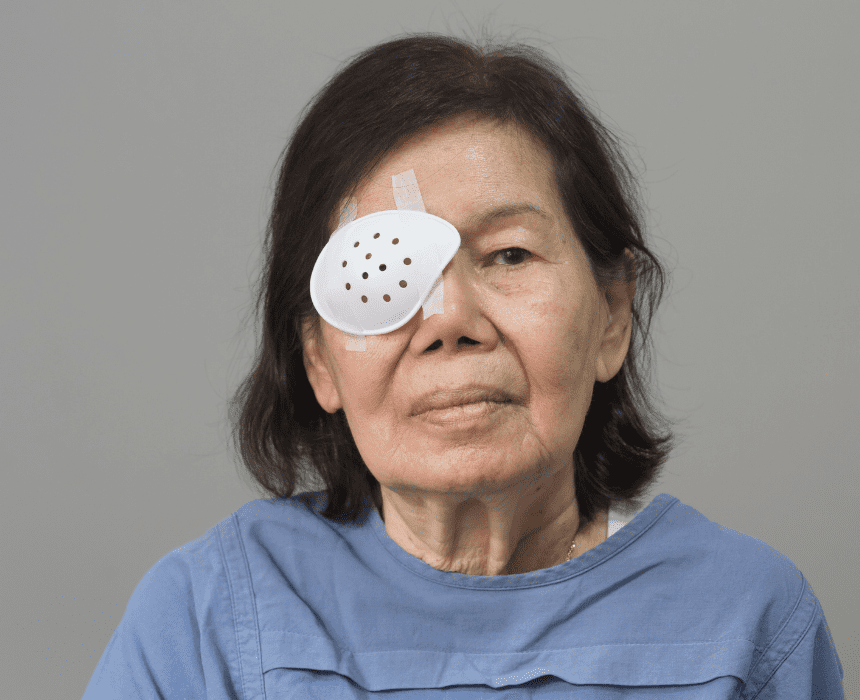
The patient needs to wear the eye patch until the next day, then return to see the eye surgeon to determine the follow-up appointment schedule.
The surgeon will remove the sutures when the patient's eye is ready, usually about 2 weeks after surgery.
Anterior chamber drainage valve/shunt implantation
This is a recommended method when a patient's Glaucoma is difficult to control with intraocular pressure.
The surgical process can last from 1 to 2 hours, which includes placing a drainage tube into the eye.
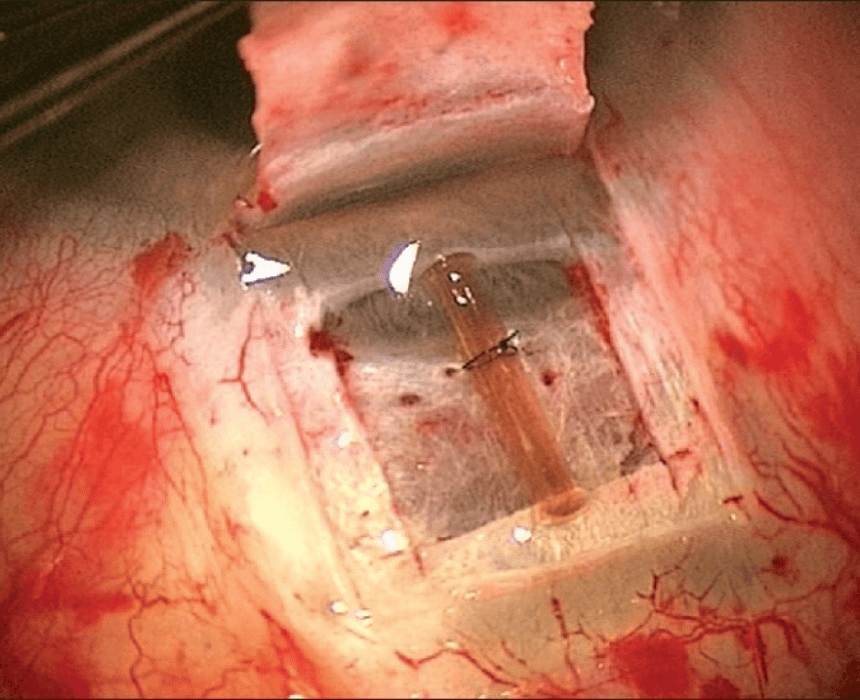
Placing the drainage tube will reduce the pressure inside the eye, helping more aqueous humor drain out.
The surgery is usually performed under local anesthesia, but in a few cases, the patient may undergo general anesthesia.
Minimally invasive glaucoma surgery – MIGS
This is a method that uses microscopic incisions and extremely small devices to reduce the pressure inside your eye.
The MIGS surgical process takes only a few minutes.
In addition, the patient's recovery process will also happen faster compared to other types of surgery.
MIGS is typically used only for mild cases of glaucoma, but nowadays, this method is becoming increasingly popular and applied in many places.
Although MIGS is a Glaucoma surgical method that features a shorter operation time and a lower risk of complications.
However, some experts argue that this method is not as effective as gold-standard surgical alternatives, such as trabeculectomy.
Besides, the cost of the small and specialized equipment required to perform a MIGS procedure is also very expensive.
This can cause difficulties for patients when it is not covered by insurance.
Detailed Steps of Glaucoma Surgery
Before glaucoma surgery
Before the surgery, patients will be examined and advised by doctors on issues such as:
- Performing eye checks using diagnostic tests.
- The patient's expectations before, during, and after surgery.
- Reviewing the patient's medical history and current medications being used.
In addition, the doctor will also provide detailed pre-operative instructions for the patient.

These tasks may vary from person to person. But generally, patients may need to:
- Avoid using non-steroidal anti-inflammatory drugs (NSAIDs), aspirin, or anticoagulants (blood thinners).
- Have a family member accompany them to drive the patient to the hospital and back home after discharge.
- Ensure which medications can be used or must not be used before undergoing surgery.
- Fast (stop eating or drinking) for a few hours before surgery; this depends on the method of local or general anesthesia.
During Glaucoma Surgery
What happens during the procedure depends on the specific type of surgery the patient is undergoing.
Generally speaking, glaucoma surgery is an outpatient procedure, meaning the patient will go home on the same day.
Depending on the treatment methods performed by the ophthalmologist, patients will receive local anesthesia, numbing eye drops, and/or a local anesthetic injection for the eye.
For cases treated with laser methods, the surgical process is usually performed right at the ophthalmologist's clinic.
If the patient undergoes trabeculectomy, drainage valve/shunt implantation, MIGS, or cyclophotocoagulation, the surgical procedure will take place in an operating room.
Patients may require intravenous (IV) sedation or general anesthesia.
With IV sedation, patients will feel less pain or discomfort but will remain awake during the surgery.
Conversely, patients will not be conscious if general anesthesia is administered.
How long does Glaucoma surgery take?
Most laser glaucoma treatment methods take only a few minutes.
The operation time for MIGS procedures will vary depending on the specific protocol and whether the surgeon is performing concurrent cataract surgery.
In addition, the operation time for MIGS methods is generally less compared to traditional surgeries, such as trabeculectomy and shunt/valve implantation, which can take up to about an hour.
What to do after surgery
In cases where patients undergo procedures under local anesthesia at the clinic, they can be discharged and return to their daily routines.
If a patient undergoes a Glaucoma surgical method that involves general anesthesia or sedation, the patient will need a driver or a relative to take them home.
After surgery, the patient will need to return to see the ophthalmologist for follow-up appointments to monitor intraocular pressure and the eye's recovery process.
Is Glaucoma surgery painful?
The surgeon will use local anesthesia and general anesthesia to ensure patients will not feel pain during the surgical process.
Patients may experience some soreness and irritation after surgery.
How long is the recovery time after Glaucoma surgery?
Recovery time will vary depending on the specific surgical method and the condition the patient has.
For treatments conducted at the clinic, patients only need one day to rest and can then return to normal activities.
For other surgeries, patients may need to restrict certain activities, such as avoiding lifting heavy objects, for up to a month.
Typically, patients will be prescribed eye drops and will receive a follow-up appointment schedule to monitor visual acuity and intraocular pressure (pressure inside the eye).
Patients may need to have a bandage applied to the eye and must keep it dry for a certain period of time.
You should not rub the eye until the surgeon informs you that it is safe to do so.
When should you contact a doctor?
The surgeon will provide instructions to the patient regarding when to call and when to meet them for a follow-up exam after discharge.
Typically, patients should call the doctor if they experience symptoms such as:
- Severe eye pain.
- Loss of vision.
- Redness, watering, or eye discharge that becomes increasingly severe.
Through this article, Hikari hopes you now have a comprehensive overview of glaucoma surgery. If you are experiencing ocular conditions such as cataracts, glaucoma, or related disorders, please contact Hikari Eye Care to be examined and consulted by a team of highly qualified physicians with extensive experience in ophthalmology.
Myopia Examination & Management at Hikari
Contact Hikari Today for a Comprehensive Eye Examination by Our Experienced Ophthalmology Team
Hikari Eyecare is a specialized eye center focusing on vision care and myopia management, equipped with advanced technology and a highly experienced team of eye specialists, providing personalized solutions for each patient.
🌐Website: https://hikarieyecare.com/
📘 Fanpage: Hikari Eyecare
📞 Hotline: 0961 39 39 83
📍 Branch 1: 17 Bui Thi Xuan Street, Ben Thanh Ward, Ho Chi Minh City
📍 Branch 2: 130 Bui Thi Xuan Street, Ben Thanh Ward, Ho Chi Minh City
👉 Contact us today for professional consultation and personalized myopia control solutions.


